Three walkers in Anse du Petit MoulinThree walkers in Anse du Petit Moulin
©Stroll around Anse du Petit Moulin|Jérémy Jéhanin

Protected natural areas A heritage worth fighting for

Nestling between the river and the ocean, Bénodet is home to an exceptional natural heritage, and that includes sensitive ecosystems with remarkable biodiversity. The commune is committed to protecting and enhancing its natural areas, and invites you to discover them while maintaining their ecological balance.


#1 Petit Moulin Cove

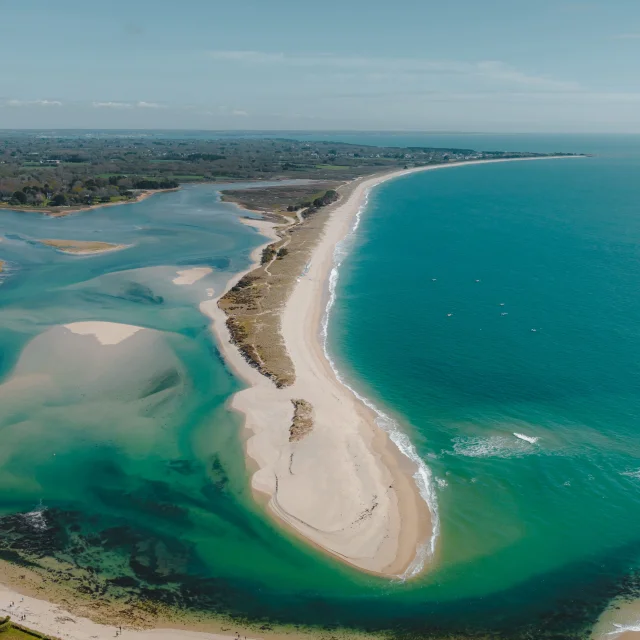
On the border between Bénodet and Fouesnant, this vast area between land and sea is a wetland of major ecological interest. Comprising lagoons, dunes and meadows, it is a haven for migratory birds and plant species specific to saline environments. The site is classified as one of Finistère’s Sensitive Natural Areas (ENS).

#2 Mousterlin Dunes

Located on the edge of the Letty lagoon, these dunes form a rare and fragile coastal landscape. They are home to plant life characteristic of sandy environments and help to protect the coastline. Access is regulated to limit erosion and damage caused by trampling.

#3 The Glénan Archipelago

Accessible by boat from Bénodet, the Glénan archipelago is a natural jewel classified as a Natura 2000 zone. These tropical-lookingislands are home to unique biodiversity both on land and in the water. This collection of islands is home to the famous Glénan narcissus, a protected native species. The archipelago is a hotbed of environmental awareness, with strict rules designed to limit the impact of tourism.

Preserving while discovering

These accessible and protected natural areas are open to the public subject to certain access conditions. Facilities  such as signposted paths and information panels make it easier to explore the sites while respecting their ecological balance. It is essential to stay on the paths, not to pick or damage plants, and to keep dogs on a lead.

Nature activities, organised by the regional or local associations, provide a better understanding of the ecological richness of the sites, while encouraging the adoption of good environmental practices.

Focus on the pontoon built for terns in Anse de Penfoul

To protect the colony of Common Terns, the town of Bénodet has redeveloped a pontoon in Penfoul Cove, in partnership with theFrench Bird Protection League (LPO ). The project arose when it became clear that the original pontoons were an unsuitable nesting site for the terns, as the eggs could roll away in the wind and the heat could be fatal for the chicks.

Inaugurated just before the Covid-19 pandemic, the new structure was an immediate success. The number of mating pairs has risen from a maximum of 21 in 2018 to 58 in 2023. The number of fledglings has also risen from a low of 8 in 2019 to 83 in 2023, exceeding all expectations.

This initiative confirms that the development of artificial sites is an effective solution for the reproduction of terns, which find refuge there from human disturbance. Around a third of the terns in Brittany nest on this type of setting.

In 2019, an awareness-raising event in the harbour attracted more than a hundred people, reinforcing the interest in this project. The pontoon also welcomed a Roseate Tern in 2021, encouraging the installation of specific nesting boxes for this species.